
Introduction
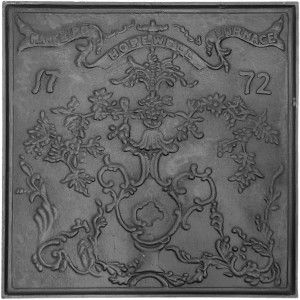
The Hopewell Cast Iron Fireback stands as a testament to practical fireplace enhancements, merging historical aesthetics with modern heating efficiency. Drawing inspiration from America's rich past, this fireback is designed not only to augment the warmth emitted by a home's hearth but also to serve as a striking piece of decor with its detailed design and storied origins.
Advantages
- Improves room warmth by reflecting heat into the surrounding space.
- Protects the integrity of the fireplace bricks from direct flame exposure.
- Doubles as a piece of Americana, adding aesthetic value to the fireplace.
- Particularly suitable for shallow, tall, and wide fireplaces, optimizing fuel efficiency.
- Associated with a notable historical narrative linked to Hopewell Furnace.
- Enhances the visual appeal of the fireplace when not in use.
- Can be paired with feet (CFB-F) to aid in heat tempering and draft regulation.
- Provides a sense of pride for owners appreciating historical American craftsmanship.
- Offered at a competitive price point, presenting good value.
- Increases heat output dramatically compared to not using a fireback.
Disadvantages
- Some users might find the product heavy and challenging to set up, especially for the elderly.
- Although durable, there are mentions of the fireback cracking under intense heat if not used properly.
- Requires a careful setup with appropriate feet to prevent temperature stress and potential cracking.
- May not retain heat for an extended period after the fire dwindles.
- The actual thickness of the fireback is reported to be less than advertised, which may influence longevity.
- Misleading marketing regarding dimensions, especially the 3/4inch thickness claim.
- Thinner construction compared to some traditional firebacks.
- Concerns over the potential need for early replacement due to thickness and durability.
- Customer service issues with truthful communication from the manufacturer and vendors.
- The necessity for additional purchases (like the feet) to ensure proper functioning could be a hidden cost.
Conclusion
The Hopewell Cast Iron Fireback is a dual-purpose accessory for any fireplace. It significantly enhances the heating efficiency while also serving as an iconic piece of Americana decor. Despite its numerous benefits, potential buyers should weigh the concerns regarding its weight, thickness, and durability. Nevertheless, for those seeking to increase the function and form of their fireplace, the Hopewell Cast Iron Fireback is an option worthy of consideration.
FAQ
- Is the Hopewell Cast Iron Fireback heavy?
Yes, it is relatively heavy (about 70 lbs), which can be a consideration for handling and installation. - How does the fireback improve heat efficiency?
It reflects heat that would otherwise be absorbed by the bricks into the room, increasing the heat output. - What is the historical significance of the Hopewell Cast Iron Fireback?
It is associated with Hopewell Furnace, an iconic historical site tied to the Revolutionary War era. - Can this fireback crack under certain conditions?
Yes, if not properly raised from the hearth or exposed to intense heat, cracking can occur. - Is the fireback one uniform thickness?
No, the border is about 3/4 inch thick, while the main body of the fireback is thinner, approximately 1/4 inch. - How do I prevent the fireback from cracking?
Use a set of feet to raise it and avoid overheating it with excessively intense fires. - Does the fireback come with the necessary accessories for installation?
No, additional accessories like feet may be required for optimal installation and function. - Is there a discrepancy in the advertised and actual product thickness?
Yes, there are reports that the advertised thickness is greater than the actual thickness of the fireback. - Does the cast iron fireback have any design elements?
Yes, it features detailed designs that add to its aesthetic appeal. - How does the thickness affect the fireback's performance?
A thicker fireback tends to retain heat longer but may also be heavier and more durable. In this case, the thinner body of the fireback may affect its heat retention and longevity.
Don't overpay on Amazon
Join Testmarket for exclusive deals, cashback and expert product reviews — free.
